
 Trusted by customers across Europe

This is either an older model or we can or will no longer reorder this product from the manufacturer.
Don't give up – we have some other alternatives for you to choose from:
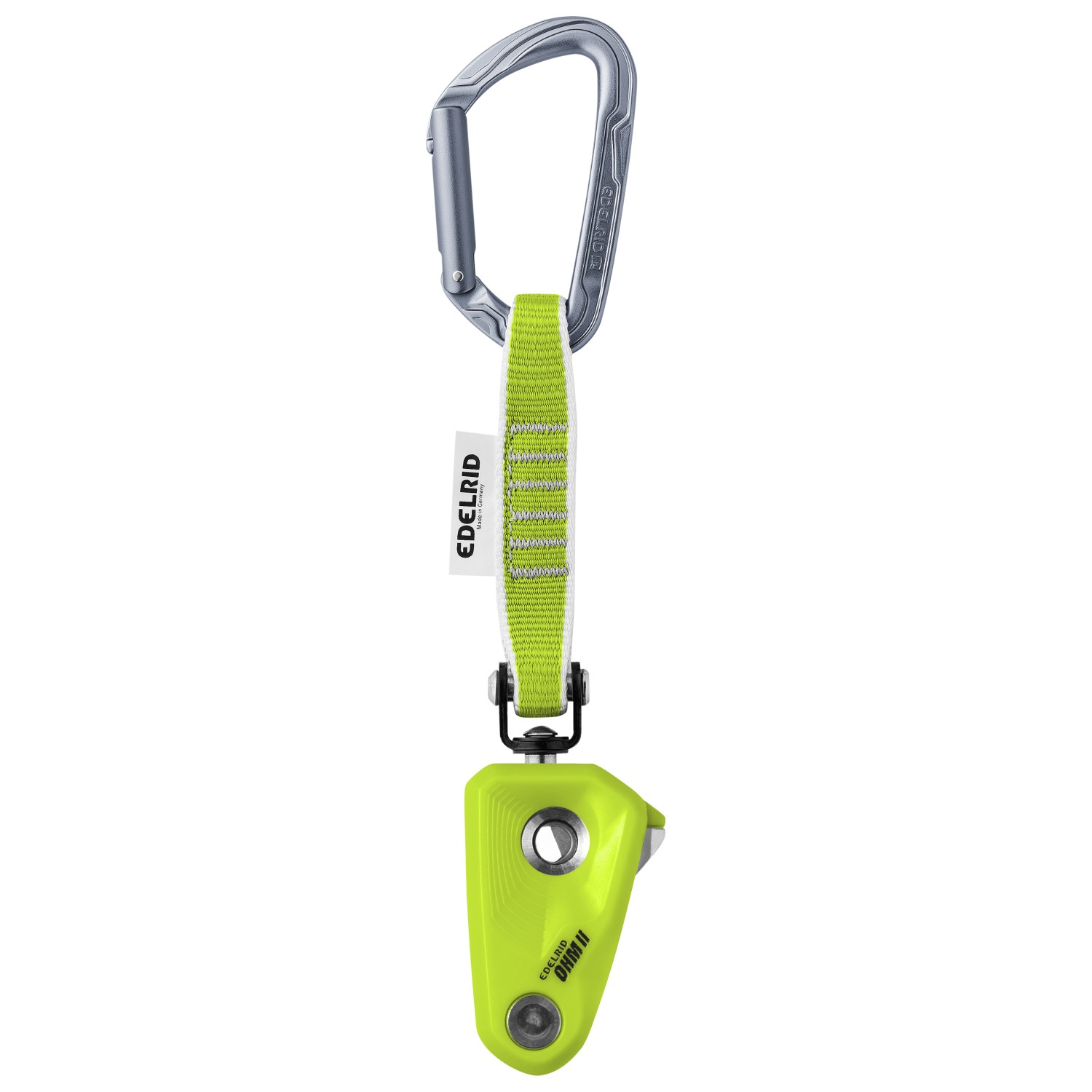
Edelrid - Ohm - Brake assistant



At a glance


Material information & features
- Recommended use:
- indoor climbing, sport climbing
- Other material information:
- made in Germany
- Suitable ropes:
- 8.9 mm - 11 mm, single ropes
- Weight:
- 450 g
- Weight reference:
- per piece
- Misc:
- minimum weight of the belayer: 40 kg
- Note:
- Belay device required
- Legal notice:
-
Please choose a sizePlease choose a colourPlease choose a variant
- Item No.:
- 318-0238
Product description
A rope team with a big weight difference?
The 2nd generation Ohm from Edelrid is a device that allows you to belay much heavier people when lead climbing. The Ohm is hooked into the first bolt of the safety chain with the rope inserted. It acts as an assisted-braking resistor. The Ohm does not increase friction as the rope passes through the lead, nor does it have a negative effect on the rope payout. The braking performance of the device is only activated in the event of a fall, helping the belayer to slow a fall by someone up to twice their weight.
Additional safety thanks to the improved braking effect
The Ohm does not stop the rope abruptly, but slows down its speed so that the fall can be absorbed dynamically by the belayer - it therefore increases the friction in the safety chain, regardless of the belay device used. As a result, the belayer needs to apply much less manual force to the brake rope and is not pulled upwards or against the wall in an uncontrolled manner.
The solution for weight differences in the climbing teams
The Ohm increases the braking power and is primarily designed for use in gyms and rock climbing. The device acts as a braking force booster, allowing unevenly weighted partners to reach the limit of their fall without worrying that the belayer will not be able to hold them or that they will be pulled up the wall.
Note on weight differences when climbing
The German Alpine Association (DAV) recommends that the climber should weigh no more than 10 kg more than the belayer (e.g. belayer 60 kg, climber maximum 70 kg). If the climber is more than 10 kg heavier than the belayer, weight or friction-enhancing measures such as the use of the Ohm are recommended.
With the Ohm, the recommended total weight difference between climber and belayer should be between 10 and 40 kg. Edelrid specifies a minimum belayer weight of 40 kg.
The advantages at a glance:
- Enables significantly heavier people to be belayed when leading
- Braking performance only kicks in in the event of a fall
- Normal climbing and belaying is not restricted

Ask our experts
Campz expert Max
Reviews overview
Advantages
Disadvantages
Recommended use
What do you think about that?
This is what customers from around the world say:

-
Advantages
Finish Easy to use Price / performance Quick to open -
Disadvantages
Heavy -
Recommended use
Beginner Indoor climbing Ice climbing All around Sport climbing Alpine climbing Speleology Big wall
-
Advantages
Price / performance Easy to use Quick to open Versatile in its use Finish -
Recommended use
Indoor climbing All around Speleology Alpine climbing Sport climbing Beginner
-
Disadvantages
Heavy -
Recommended use
Beginner Indoor climbing Sport climbing

84% have found the reviews
by Remigi helpful
-
Advantages
Quick to open Easy to use Finish -
Disadvantages
Heavy -
Recommended use
Indoor climbing Ice climbing
-
Advantages
Easy to use Quick to open -
Recommended use
Alpine climbing Indoor climbing Sport climbing
-
Advantages
Easy to use -
Recommended use
Indoor climbing Sport climbing
-
Advantages
Quick to open Easy to use Finish -
Disadvantages
Heavy -
Recommended use
All around Beginner Indoor climbing
-
Advantages
Price / performance Quick to open Easy to use -
Recommended use
Indoor climbing Sport climbing
-
Advantages
Quick to open Easy to use Finish
There are 50 more threads!